
Concussion Treatment in Frisco — Structured Recovery, Not Indefinite Rest
Concussion isn't one injury — it's a cluster of subtypes (vestibular, oculomotor, cervical, autonomic, anxiety/mood, cognitive). Treating the subtype is what drives recovery. At Forge, we evaluate and treat them specifically.
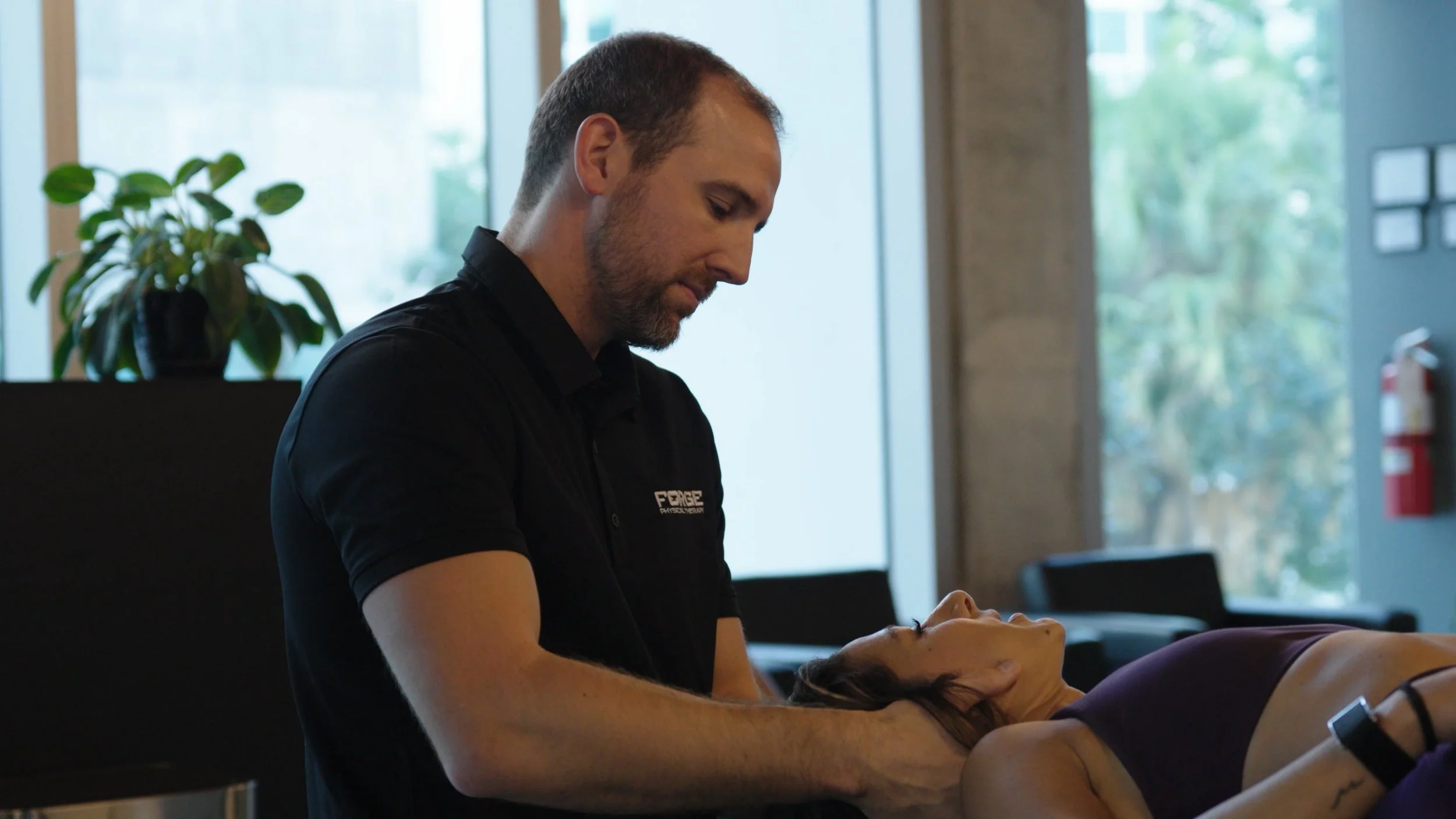
Doctor of Physical Therapy–led care.
Boutique practice, smaller caseloads.
In-network with BCBS, Cigna, Aetna, Medicare, UnitedHealthcare.
Evidence-based, outcomes-focused.
Doctor of Physical Therapy–led care. Boutique practice, smaller caseloads. In-network with BCBS, Cigna, Aetna, Medicare, UnitedHealthcare. Evidence-based, outcomes-focused.
Recent concussion, or one that never fully resolved
Concussion care has changed significantly in the last decade. The old model — dark room, no screens, rest until symptoms are gone — is no longer supported by the evidence for most patients. Modern concussion rehab identifies which specific systems are affected and treats them with targeted interventions.
- An athlete (high school, club, collegiate) sustained a concussion in a recent game or practice and is past the initial 24–48 hour rest window.
- Symptoms (dizziness, visual strain, headache, light/sound sensitivity, exercise intolerance, neck pain) are not following the expected recovery curve.
- A family member, teen, or yourself has post-concussion symptoms that have persisted beyond two weeks.
- You sustained a concussion months or years ago and were told "just give it time" — but the symptoms never fully went away.
- A neurologist, PCP, ATC, or neuropsychologist has referred you for physical-therapy-based concussion rehab.
How concussion care works at Forge
Subtype-specific evaluation
A concussion is rarely a single problem. Your evaluation screens for vestibular, oculomotor, cervical, autonomic, and effort-tolerance components — because any of these can sustain symptoms if unaddressed.
Sub-symptom-threshold exertion
Graded aerobic exertion at an intensity that does not meaningfully increase symptoms is among the most evidence-supported interventions for post-concussion recovery. We use the Buffalo Concussion Treadmill Test (or validated equivalents) to establish your exertional threshold and build the progression from there.
Cervical and vestibular care when indicated
Concussion injuries often include a neck component (the same forces that moved the brain moved the cervical spine) and a vestibular component. Cervicogenic headaches and cervical-origin dizziness will not resolve with rest alone — they need targeted manual therapy and motor control work.
Coordinated care
We routinely coordinate with referring neurologists, pediatricians, primary care physicians, urgent care providers, athletic trainers, neuropsychologists, and (when relevant) optometrists trained in post-concussion vision care. You recover faster when the team is aligned.
Your first visit
History and symptom inventory
Mechanism of injury, symptom timeline, aggravators and relievers, prior concussion history, academic/work demands, sport demands. We document a symptom-severity score to track recovery objectively.
Multi-system exam
VOMS (Vestibular/Ocular-Motor Screening), positional testing (Dix-Hallpike and variants), cervical spine exam, balance testing, oculomotor testing, and — when indicated and cleared — a supervised Buffalo Concussion Treadmill Test or equivalent exertional assessment.
Subtype diagnosis and plan
You leave with a categorization of the subtype(s) driving your symptoms and a matched plan of care — not a generic "rest and come back in two weeks."
Progressive rehab
Depending on subtypes: vestibular exercises, oculomotor work, cervical manual therapy and motor control, graded exertion, and return-to-learn / return-to-play progression. We communicate with your referring providers throughout.
We don't treat concussions in a vacuum
Concussion rehab is a multi-disciplinary problem. At Forge, we routinely work alongside the providers your case needs — and when you haven't seen the right one yet, we'll tell you and help make the connection.
If you've been referred by one of these providers, we'll send updates back on a schedule agreed with the office.
- Neurologists and sports-medicine physicians
- Pediatricians, family physicians, and urgent care providers
- School and club athletic trainers (ATCs)
- Neuropsychologists (for baseline and post-injury cognitive testing)
- Optometrists with post-concussion vision therapy training
- Audiologists and ENTs (for complex vestibular cases)
Back to class. Back to play. In that order.
For student-athletes, we follow current consensus stepwise progressions: return-to-learn first (tolerance for full academic load), then return-to-play (graded exertion, non-contact practice, full practice, game play). Each step has clinical criteria, not just a time requirement. We communicate with parents, athletic trainers, and coaches at each stage so there is no ambiguity about where the athlete is in the progression.
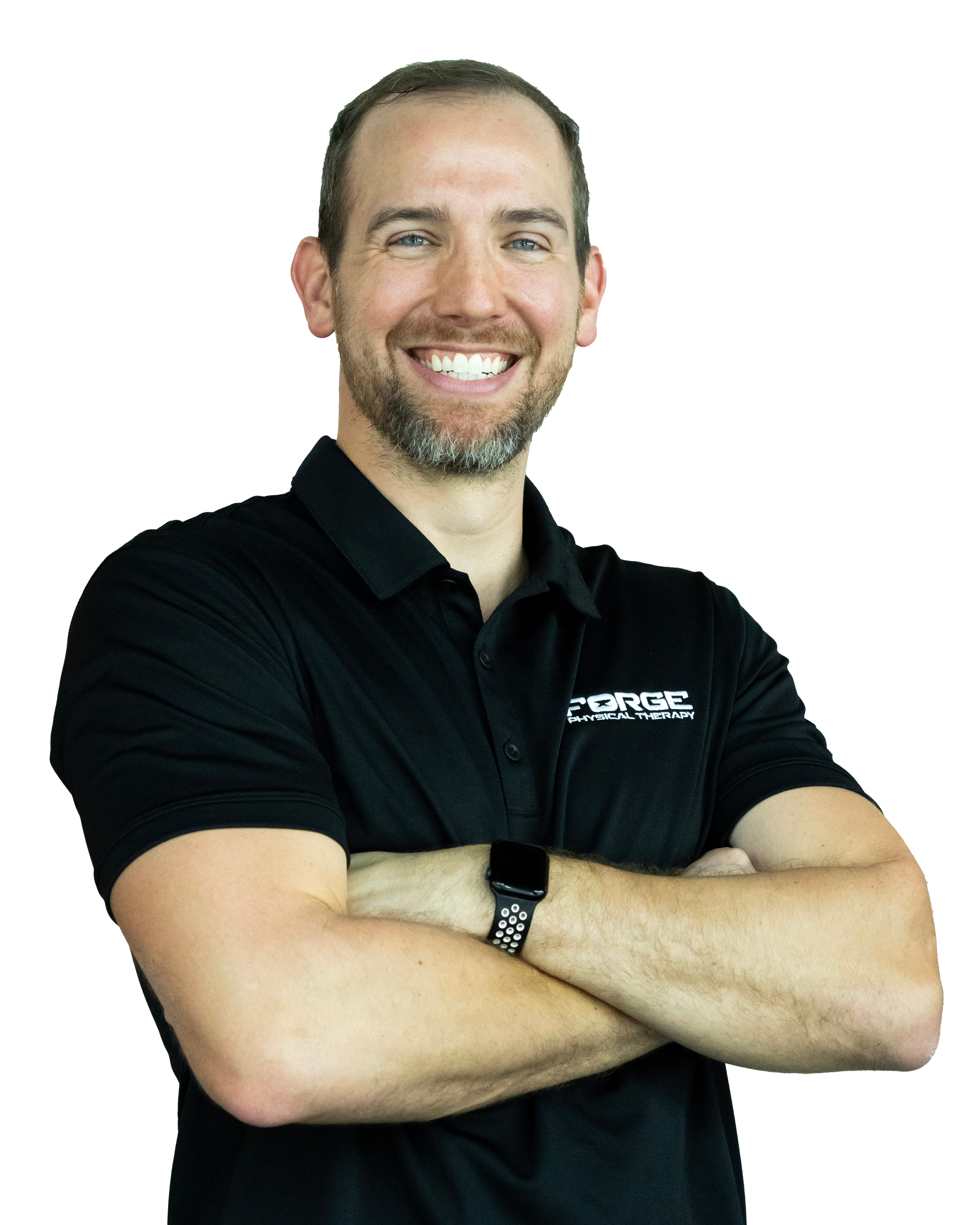
Your clinician
Dr. Eric Spencer, PT, DPT
Dr. Spencer is the founding clinician of Forge Physical Therapy. He holds a Doctor of Physical Therapy and is a Certified Vestibular Specialist through the Institute of Advanced Musculoskeletal Treatments.
His practice is built around a simple idea: a boutique, clinician-led clinic where time, attention, and plan design are calibrated to the patient — so treatment is personal, progressive, and actually moves the needle.
Meet Dr. SpencerFAQ
Frequently asked questions
When should I see a PT after a concussion?
Current best-practice guidelines recommend active rehab early — typically within the first 1–2 weeks — rather than prolonged rest. If symptoms are not resolving on schedule (usually 10–14 days for simple cases, longer for adolescents and certain presentations), an evaluation with a concussion-trained physical therapist is appropriate.
What does a concussion evaluation include?
A thorough concussion evaluation at Forge includes oculomotor testing (Vestibular/Ocular-Motor Screening — VOMS), cervical spine screening, vestibular function testing (including positional testing for BPPV), dynamic balance testing, and exertional tolerance testing (Buffalo Concussion Treadmill Test or validated equivalent). The result is a subtype-based diagnosis and a targeted plan.
Is rest the right treatment for a concussion?
A brief initial period of relative rest (24–48 hours) is appropriate. After that, prolonged rest is associated with worse outcomes. Targeted, sub-symptom-threshold activity — graded exertion, vestibular rehab, oculomotor work, and cervical treatment as indicated — is supported by current evidence.
Do you treat athletes for return-to-play?
Yes. We follow a stepwise return-to-learn / return-to-play progression aligned with current consensus statements. We coordinate with school and team athletic trainers (ATCs), the athlete's physician, and — where applicable — a neuropsychologist for baseline and post-injury cognitive testing.
Can adults have post-concussion symptoms months after an injury?
Yes. Persistent post-concussion symptoms — headaches, dizziness, visual strain, fatigue, cognitive fog, sleep disruption — can extend weeks to months beyond the initial injury. These cases are highly treatable, but they require subtype-specific evaluation. Chronic does not mean untreatable.
Get a plan for concussion recovery — not just a restriction list.
Evaluation, subtype diagnosis, and a return-to-learn / return-to-play plan on day one.
In-network with Blue Cross Blue Shield, Cigna, Aetna, Medicare, and UnitedHealthcare. If you have questions about billing and insurance request a call back.