
In-Network · Doctor of Physical Therapy
Conditions We Treat
From a stiff low back to a post-surgical knee to a vertigo episode that won't let go — these are the conditions Dr. Spencer treats at Forge. If you don't see yours, call. We'll tell you honestly whether we're the right fit.
How to use this page
Find your condition. We'll tell you which service treats it.
Conditions below are organized by body region — spine and core, upper extremity, lower extremity, vestibular and concussion, and post-surgical recovery. Each entry is a plain-language explanation of what the condition is, who tends to get it, and what physical therapy can do about it.
Every condition links to the Forge service page that addresses it. If you're not sure where you fit — or if your condition isn't listed — call (214) 774-0600 and we'll point you the right direction. That includes telling you when the answer is "you should see a different specialist first."
A note on diagnosis. You don't need a confirmed diagnosis to come in. Texas direct-access law lets a physical therapist evaluate and begin treatment without a physician referral. If imaging or specialist input would help, we'll tell you.
Body region
Spine & Core
Spine pain is the most common reason adults walk into a physical therapy clinic — and one of the most over-treated and under-resolved. The work here is mechanical: identify what movements provoke the pain, what calms it, and what pattern of strength and mobility puts the spine back in a position to tolerate normal life.
-
Low Back Pain
Acute or chronic pain in the lumbar spine, with or without radiating symptoms. Most low back pain is mechanical and responds well to graded movement, manual therapy, and targeted strengthening. The myth that low back pain requires bed rest, surgery, or imaging-driven diagnosis is largely outdated.
Treated by: Physical Therapy
-
Sciatica & Lumbar Radiculopathy
Pain, numbness, or weakness that travels from the low back into the buttock and leg, usually caused by compression or irritation of a nerve root. Most cases improve with directional preference exercises, neural mobility work, and addressing the underlying mechanical driver — not with extended rest.
Treated by: Physical Therapy
-
Neck Pain
Stiffness, ache, or sharp pain in the cervical spine. Common drivers include sustained postures (desk work, driving), training load, prior whiplash, and underlying joint or disc irritability. Manual therapy and motor-control retraining are the workhorses; passive modalities are not.
Treated by: Physical Therapy
-
Cervical Radiculopathy
Nerve-root irritation in the neck causing pain, numbness, tingling, or weakness down the arm. Treatment combines positional unloading, traction-based or directional exercises, and progressive cervical and scapular strength work. Most cases resolve without injection or surgery.
Treated by: Physical Therapy
-
Thoracic (Mid-Back) Pain
Pain between the shoulder blades, often dismissed as "posture." It usually isn't just posture — it's a combination of segmental stiffness, breathing pattern, and load tolerance. Targeted mobility plus thoracic and scapular strength work moves it.
Treated by: Physical Therapy
-
TMJ & Jaw Dysfunction
Pain, clicking, locking, or limited opening of the jaw. PT for TMJ addresses the joint capsule, the muscles of mastication, the cervical spine (which often co-drives jaw symptoms), and habit patterns like clenching. Often missed as a PT-treatable problem.
Treated by: Physical Therapy
-
SI Joint Dysfunction
Pain at the base of the spine, often deep, often one-sided, frequently provoked by transitions (sit-to-stand, rolling in bed, single-leg stance). Effective treatment combines targeted manual therapy with stabilization work — generic core exercises usually miss the point.
Treated by: Physical Therapy
Body region
Upper Extremity
Shoulder, elbow, wrist. The shoulder is the most mobile joint in the body and the most commonly mismanaged in conservative care. The work here is precise: identify the structure driving the pain, restore the mobility that's been lost, and rebuild strength through the full available range — not just in the painless one.
-
Rotator Cuff Injuries
Includes rotator cuff tendinopathy, partial tears, and full-thickness tears. Most tendinopathy and partial tears respond well to progressive loading and targeted manual therapy. Full-thickness tears may require surgical consultation; we'll tell you when imaging or a referral is warranted.
Treated by: Physical Therapy
-
Frozen Shoulder (Adhesive Capsulitis)
Progressive loss of shoulder motion, usually painful, often without a clear precipitating event. The condition runs through phases (freezing, frozen, thawing) over 12–24 months. Skilled manual therapy and graded mobility work shorten the timeline and protect the surrounding joints from compensation patterns.
Treated by: Physical Therapy
-
Shoulder Impingement
Pinching or pain on the top of the shoulder during overhead motion. Often a symptom rather than a diagnosis — driven by scapular control, rotator cuff strength, thoracic mobility, or capsular restriction. Treatment targets the actual driver, not the impinged tissue itself.
Treated by: Physical Therapy
-
Shoulder Instability
The sensation of the shoulder slipping, "going out," or feeling unstable — common after a dislocation, with hypermobility, or in overhead athletes. Conservative management focuses on dynamic stabilization and load tolerance; surgical consultation is appropriate after recurrent dislocations.
Treated by: Physical Therapy
-
Tennis Elbow (Lateral Epicondylalgia)
Pain on the outside of the elbow, usually provoked by gripping or wrist extension. It's a tendinopathy, not an inflammation — which means rest doesn't fix it. Heavy-slow loading, manual therapy, and identifying the upstream driver (wrist mechanics, grip volume, neck involvement) are the work.
Treated by: Physical Therapy
-
Golfer's Elbow (Medial Epicondylalgia)
Pain on the inside of the elbow, the medial-side counterpart to tennis elbow. Same principle — tendinopathy responds to load, not rest. Frequently coexists with cervical or thoracic restrictions that should be addressed alongside the elbow itself.
Treated by: Physical Therapy
-
Carpal Tunnel Syndrome
Numbness, tingling, or weakness in the thumb, index, and middle fingers from compression of the median nerve at the wrist. Mild and moderate cases often respond to nerve mobility work, ergonomic correction, and addressing any cervical or thoracic outlet contributors. Severe cases warrant surgical consultation.
Treated by: Physical Therapy
-
Thoracic Outlet Syndrome
Compression of nerves and/or vessels between the neck and shoulder, producing pain, numbness, or weakness in the arm — sometimes mistaken for cervical radiculopathy or carpal tunnel. Diagnosis is clinical; treatment combines neural mobility, postural retraining, and first-rib and scalene mobility work.
Treated by: Physical Therapy
Body region
Lower Extremity
Hip, knee, ankle, foot. Most lower-extremity pain is load-management failure — tissue capacity falls below the demands you're placing on it, or demands rise faster than capacity adapts. The work is to restore range, rebuild strength under load, and progress back to the activity that triggered the problem with a tissue that can handle it.
-
Hip Osteoarthritis
Joint-space narrowing and cartilage degeneration in the hip. Imaging often looks worse than the patient feels — and feels worse than the imaging looks. PT for hip OA focuses on restoring rotation, building hip and gluteal strength, and improving the way load is transferred through the joint. Many patients delay or avoid replacement entirely.
Treated by: Physical Therapy
-
Hip Labral Tear
Tear in the cartilage rim of the hip socket, often associated with femoroacetabular impingement (FAI). Conservative care addresses the surrounding mechanics — hip stability, capsular mobility, gluteal strength — and is the first-line approach for most cases before surgical consultation.
Treated by: Physical Therapy
-
Greater Trochanteric Pain (Gluteal Tendinopathy)
Pain on the outside of the hip, often worst with side-lying, prolonged standing, or single-leg loading. Frequently misdiagnosed as bursitis. The current evidence points to gluteal tendinopathy — a tendon-loading problem that responds to progressive isometric and isotonic strength work, not to rest or stretching.
Treated by: Physical Therapy
-
Knee Osteoarthritis
Cartilage wear and joint changes in the knee. Like hip OA, imaging is a poor predictor of pain or function. Strength work — particularly quadriceps loading — is the single highest-leverage intervention. PT for knee OA reliably reduces pain and delays or avoids the need for replacement in many patients.
Treated by: Physical Therapy
-
Meniscus Injuries
Tears in the cartilage cushions of the knee. Most meniscus tears in adults — particularly degenerative tears — respond as well to physical therapy as to surgery, and the research consistently bears that out. Acute traumatic tears in younger or more active patients may require surgical consultation.
Treated by: Physical Therapy (if conservatively managed) or Post-Surgical Rehab (after surgery)
-
Patellofemoral Pain Syndrome
Pain at the front of the knee, often around or under the kneecap, provoked by stairs, squats, or prolonged sitting. The driver is usually upstream — hip strength, foot mechanics, training load — not the kneecap itself. Treatment is built accordingly.
Treated by: Physical Therapy
-
IT Band Syndrome
Pain on the outside of the knee, common in runners and cyclists. The fix is rarely "stretch the IT band" — it's load management combined with hip and gluteal strength work that changes how the leg moves under load. Returning to running with a graduated plan is part of the protocol.
Treated by: Physical Therapy
-
Achilles Tendinopathy
Pain and stiffness in the Achilles tendon, often worst in the morning or at the start of activity. Heavy-slow tendon loading is the gold-standard intervention — 8–12 weeks of progressive work outperforms rest and modalities. Most cases resolve fully with a structured program.
Treated by: Physical Therapy
-
Plantar Fasciitis
Pain at the bottom of the heel, classically worst with the first steps in the morning. Treatment combines manual therapy, calf and intrinsic foot strengthening, and load management. Stretching alone is usually not enough; loading is.
Treated by: Physical Therapy
-
Ankle Sprains
Acute and chronic ankle ligament injuries. The biggest pitfall after an ankle sprain is incomplete rehab — most people get back to walking and assume they're done. Without restoring proprioception, strength, and dynamic stability, recurrence is common. Forge runs ankles through full criteria-based recovery.
Treated by: Physical Therapy or Sports Injury Recovery
Body region
Vestibular & Concussion
Dizziness, vertigo, balance problems, and post-concussion symptoms are commonly under-treated in general PT settings because they require specialized testing and a different therapeutic toolkit. Dr. Spencer is a Certified Vestibular Specialist through the Institute of Advanced Musculoskeletal Treatments. These conditions are a core focus of the practice.
-
BPPV (Benign Paroxysmal Positional Vertigo)
The most common cause of vertigo — brief, intense spinning triggered by head position changes (rolling over, looking up, lying down). Caused by displaced inner-ear crystals. Treated with specific repositioning maneuvers (Epley, Semont, others) selected based on which canal is involved. Most cases resolve in 1–3 visits.
Treated by: Vestibular Therapy
-
Vestibular Neuritis & Labyrinthitis
Inflammation of the vestibular nerve or inner ear, usually following a viral illness, producing acute and severe vertigo. Recovery requires central compensation — the brain learning to recalibrate to the new vestibular input. Vestibular rehab significantly accelerates that process.
Treated by: Vestibular Therapy
-
Vestibular Hypofunction
Reduced function of one or both vestibular systems, producing imbalance, dizziness with head movement, and visual instability. Treated with vestibular adaptation and substitution exercises tailored to whether the loss is unilateral or bilateral.
Treated by: Vestibular Therapy
-
Vestibular Migraine
Migraine-related vertigo and dizziness, often without the classic headache. Vestibular rehab is part of a broader management approach that includes lifestyle and trigger management; it reduces sensitivity and improves day-to-day function during and between episodes.
Treated by: Vestibular Therapy
-
Cervicogenic Dizziness
Dizziness driven by upper-cervical dysfunction rather than the vestibular system itself. Often presents alongside neck pain or after whiplash. Diagnosis is clinical (vestibular causes ruled out first); treatment combines manual therapy and sensorimotor retraining of the cervical spine.
Treated by: Vestibular Therapy
-
Concussion (mTBI)
A mild traumatic brain injury, with symptoms that may include headache, dizziness, cognitive fog, light or noise sensitivity, and sleep disturbance. Modern concussion care is active, not "rest until symptoms resolve." Forge uses VOMS, Buffalo Concussion Treadmill testing, and sub-symptom-threshold exertion to drive recovery.
Treated by: Concussion Treatment
-
Post-Concussion Syndrome
Persistent symptoms beyond the typical 7–14 day window after a concussion. Treatment is targeted to the dominant symptom domain — vestibular, cervical, autonomic, or visual — and progresses with objective testing rather than pure symptom report.
Treated by: Concussion Treatment
-
Persistent Postural-Perceptual Dizziness (PPPD)
A chronic functional dizziness disorder, often following an acute vestibular event. Characterized by ongoing unsteadiness, dizziness in busy visual environments, and worsening with motion. Treated with graded exposure-based vestibular and visual retraining.
Treated by: Vestibular Therapy
Body region
Post-Surgical Recovery
Surgery sets the stage. Rehab determines the outcome. Forge runs structured, surgeon-aligned post-op recovery for the most common orthopedic procedures — protocol-aware, criteria-based, and built around what your surgeon's plan actually says.
-
Rotator Cuff Repair
Post-surgical recovery from arthroscopic or open rotator cuff repair. Phases are protected motion, active assisted motion, active motion, and progressive strengthening — staged against your surgeon's specific protocol. The biggest mistake is rushing the strengthening phase; the second biggest is under-mobilizing in the protected phase.
Treated by: Post-Surgical Rehab
-
Shoulder Labrum Repair
Post-op recovery from labral repair (SLAP, Bankart, or other). Conservative early-phase loading protects the repair; later phases focus on rotator cuff endurance, scapular control, and — for athletes — sport-specific return-to-throw or return-to-overhead progressions.
Treated by: Post-Surgical Rehab
-
ACL Reconstruction
Post-op recovery from ACL reconstruction. Standard recovery is 9–12 months to sport. Forge runs a criteria-based progression — strength symmetry, hop testing, and movement quality drive the timeline, not the calendar. Premature return-to-sport is the single biggest predictor of re-tear.
Treated by: Post-Surgical Rehab
-
Total Joint Replacement (Knee, Hip, Shoulder)
Post-op recovery from total knee, total hip, or shoulder arthroplasty. Early phases focus on motion restoration, swelling control, and gait or shoulder mechanics; later phases progress strength and functional capacity. Outcomes improve substantially with a structured course of skilled PT versus self-directed recovery.
Treated by: Post-Surgical Rehab
-
Spine Surgery (Fusion, Decompression, Discectomy)
Post-op recovery from common spine procedures. Each procedure has a different biological timeline and a different set of motion and load restrictions; the rehab plan is built to match. The goal is full functional capacity, not just absence of pain.
Treated by: Post-Surgical Rehab
-
Achilles Repair
Post-op recovery from Achilles tendon repair. Modern protocols progress weight-bearing and motion earlier than they used to, but they're surgeon-specific. Late-stage work focuses on calf strength symmetry and return to running or jumping with criteria — not by calendar.
Treated by: Post-Surgical Rehab
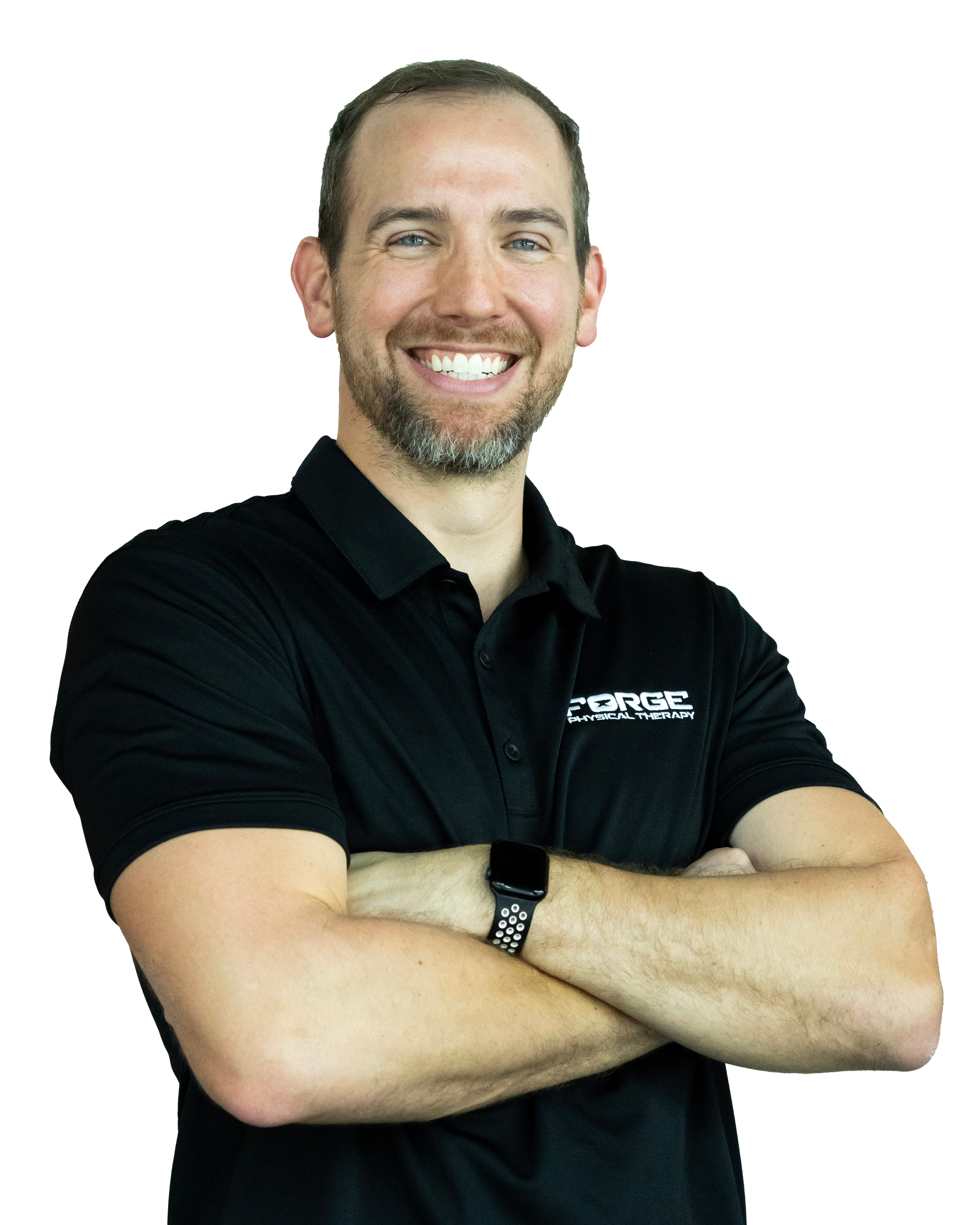
Your clinician
Dr. Eric Spencer, PT, DPT
Dr. Spencer is the founding clinician of Forge Physical Therapy. He holds a Doctor of Physical Therapy and is a Certified Vestibular Specialist through the Institute of Advanced Musculoskeletal Treatments.
His practice is built around a simple idea: a boutique, clinician-led clinic where time, attention, and plan design are calibrated to the patient — so treatment is personal, progressive, and actually moves the needle.
Meet Dr. SpencerFAQ
Frequently asked questions
I don't see my condition listed. Can you still help?
Probably yes. The list above covers the most common conditions we treat, not all of them. Call us at (214) 774-0600 and describe what's going on — we'll tell you whether we're the right fit for you, including when the answer is "you should see a different specialist first."
Do I need a diagnosis before I come in?
No. In Texas, you do not need a physician referral or a confirmed diagnosis to begin physical therapy. Dr. Spencer will perform a clinical evaluation at your first visit. If imaging or specialist input would help guide care, we'll tell you and coordinate the referral.
What if I have multiple conditions at once?
That's common — neck pain alongside shoulder dysfunction, a knee issue with a hip contributor, post-surgical recovery on top of a longstanding back problem. The plan of care prioritizes the most disabling problem first and addresses the others in sequence as your capacity allows.
Do you treat conditions I'd normally see a specialist PT for?
Vestibular and concussion care are core specialties at Forge — Dr. Spencer is a Certified Vestibular Specialist. For pelvic floor dysfunction, lymphedema, neurologic conditions (stroke, Parkinson's), and pediatric PT, we'll point you to a specialist clinic better equipped for those populations.
How many visits will I need?
Plans of care are specific to the condition and the individual. Most orthopedic conditions respond in 6–12 visits; vestibular cases often resolve faster (1–6 visits for BPPV, 6–10 for hypofunction); post-surgical recovery is staged against the surgical protocol and typically runs 12–24 weeks. Dr. Spencer will give you a clear estimate at your evaluation.
What insurance do you accept?
Forge is in-network with Blue Cross Blue Shield, Cigna, Aetna, Medicare, and UnitedHealthcare.
Find your condition. Or call and we'll find it with you.
Book an evaluation in under two minutes — or call us and we'll walk you through it.
In-network with Blue Cross Blue Shield, Cigna, Aetna, Medicare, and UnitedHealthcare.
If you have questions about billing and insurance request a call back.