
Sports Injury Recovery in Frisco — Return to Sport on Criteria, Not "It Feels Okay"
Reinjury rates after sports injuries are driven by returning to play before you're truly ready. Forge runs rehab the same way strength coaches run programs: progressive load, objective testing, and a clear definition of done.
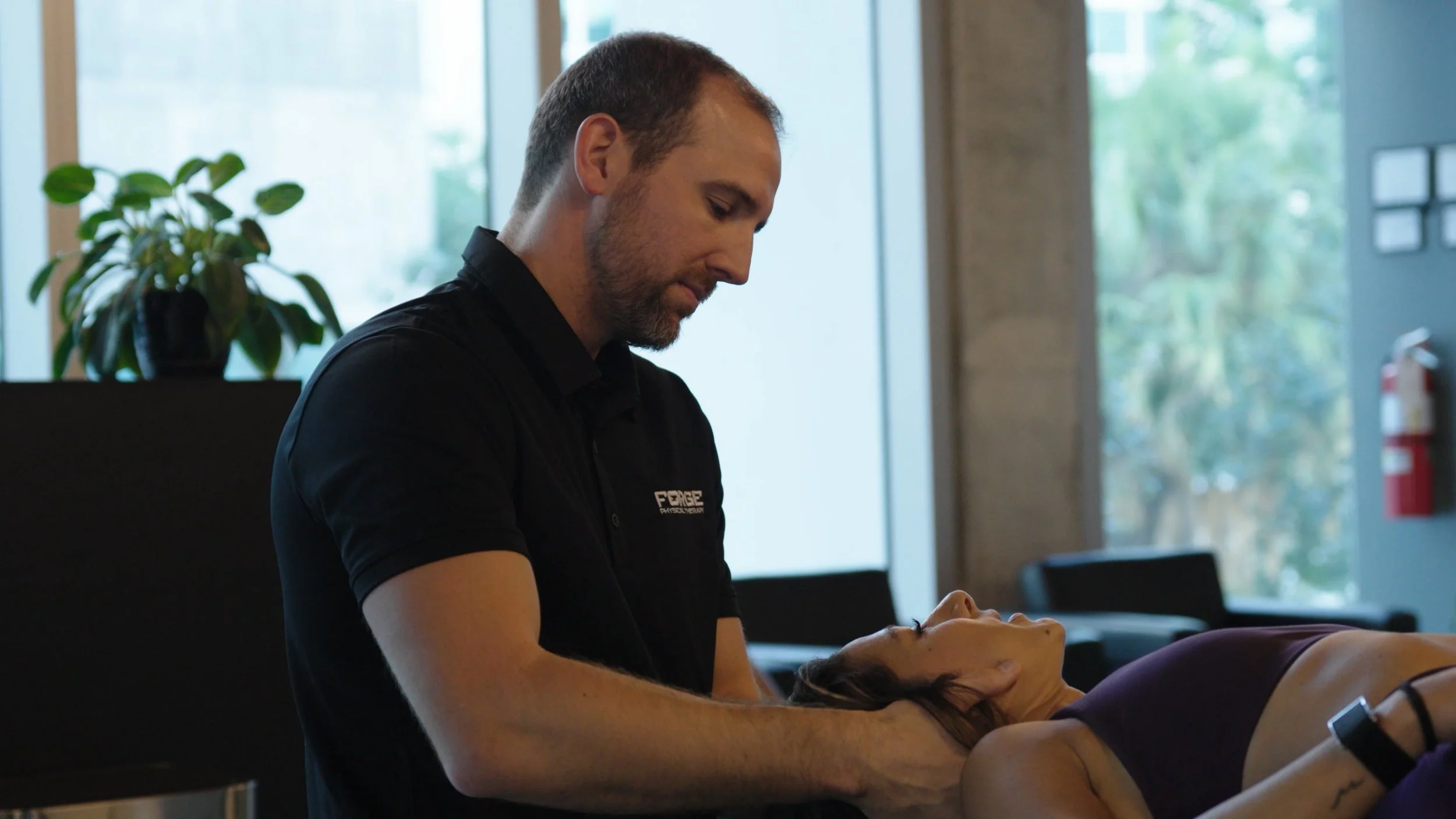
Doctor of Physical Therapy–led care.
Boutique practice, smaller caseloads.
In-network with BCBS, Cigna, Aetna, Medicare, UnitedHealthcare.
Evidence-based, outcomes-focused.
Doctor of Physical Therapy–led care. Boutique practice, smaller caseloads. In-network with BCBS, Cigna, Aetna, Medicare, UnitedHealthcare. Evidence-based, outcomes-focused.
You're an athlete — your rehab should treat you like one
Athlete rehab is its own discipline. The demands of sport don't show up in a generic exercise program: sprinting, cutting, jumping, landing, throwing, rotating, collisions, and fatigue change how tissue fails and how it has to be rebuilt. Treating an ACL tear in a competitive soccer player the same way you'd treat a sedentary adult's knee pain is how athletes get cleared "healed," and then tear again.
- You're a high school, club, collegiate, masters, or recreational athlete coming back from an injury or surgery.
- You've been through general PT and you're ready to take the next step to sport-specific work.
- You tore something, you're scheduled for surgery, and you want to pre-hab before the procedure.
- You're a parent of a youth or high school athlete who needs a rehab plan that respects both the sport and the developmental stage.
- You've been cleared by your surgeon but you don't feel ready — and you want someone to tell you objectively whether you are.
How sports rehab works at Forge
Progressive, sport-specific loading
Rehab is built around the loads, speeds, and positions your sport actually demands. A lineman, a pitcher, a runner, and a tennis player do not get the same late-stage program — because their sport is not the same.
Criteria, not calendars
Progression through phases is gated on objective criteria: range of motion, strength symmetry (often measured as limb symmetry index), movement quality, and sport-specific testing. Time-since-surgery is a floor, not a ceiling.
Full return-to-sport testing
Before return to play, you complete a battery of tests appropriate to your injury and sport — single-leg hop tests, Y-balance, sprint and cut assessments, and strength ratios. You leave with documentation you can show a coach, an ATC, or a surgeon.
Phases of sport rehab
Protect and restore
Control pain and swelling; restore range of motion; protect the healing tissue. Adjusted to your sport's demands, your surgical protocol if applicable, and your timeline.
Rebuild strength
Progressive resistance with an early emphasis on symmetry between limbs. We measure, we don't estimate.
Reload movement
Add speed, reactive elements, and deceleration work — the qualities that show up before cutting, sprinting, and jumping are safe.
Sport-specific drills
Practice-level drills layered in under supervision. Volume and intensity progress deliberately.
Return-to-sport testing and clearance
A test battery appropriate to your injury and sport. Results are documented and shared with your referring provider and, with consent, your coach or ATC.
Injuries we commonly treat
Lower body
- ACL and knee ligament injuries (pre-hab and post-op)
- Meniscus injuries
- Patellofemoral pain
- Hamstring strains and chronic hamstring issues
- Groin and adductor injuries
- Hip labral injuries, FAI
- Ankle sprains and chronic ankle instability
- Achilles tendinopathy and rupture (post-op and non-surgical)
- Shin splints / MTSS
- Foot and plantar injuries
Upper body & spine
- Shoulder instability, labrum, rotator cuff (including post-op)
- Tommy John (UCL) — pre-hab and post-reconstruction
- Elbow tendinopathies (lateral and medial)
- Throwing-athlete shoulder and elbow care
- Wrist, hand, and finger injuries (general care; complex hand cases referred)
- Spine — low back, thoracic, and cervical injuries in athletes
After rehab: keep training
Most athletes we rehab want to keep going after they're cleared — strength, power, speed, capacity, injury-prevention work that doesn't stop when insurance does. At that point, you've crossed from rehab into performance, and they're two different services.
Forge offers cash-pay performance coaching for exactly this transition. Scope of practice is clearly separated: once you're cleared, the medical-rehab relationship ends and a performance relationship begins.
We communicate with surgeons, ATCs, and coaches
With your consent, we send progress updates to the referring physician and the team's athletic trainer. At return-to-sport testing, documented results can be shared with coaches or athletic directors so the return is not a one-person decision. That coordination matters — the best rehab still fails if the communication chain around it breaks.
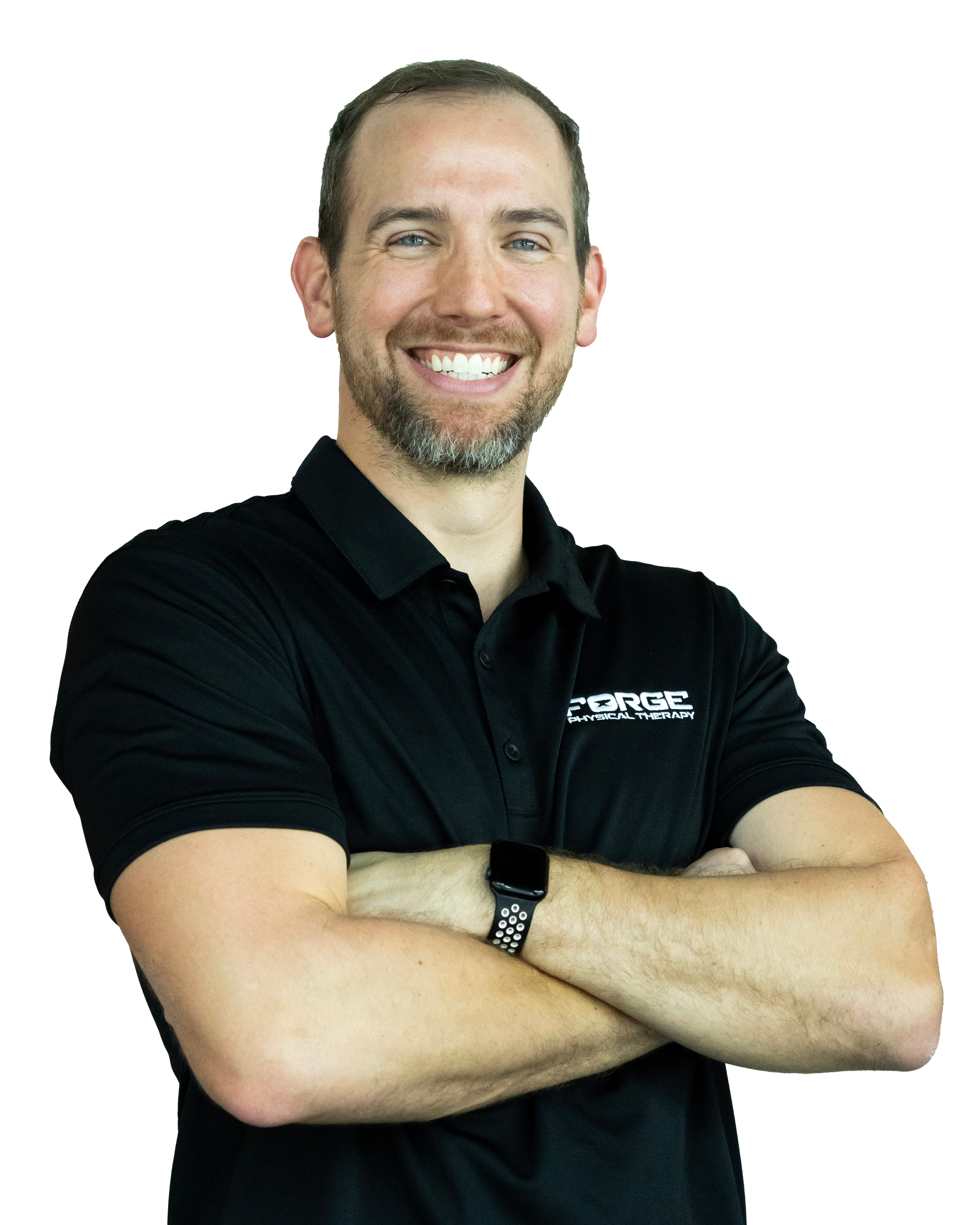
Your clinician
Dr. Eric Spencer, PT, DPT
Dr. Spencer is the founding clinician of Forge Physical Therapy. He holds a Doctor of Physical Therapy and is a Certified Vestibular Specialist through the Institute of Advanced Musculoskeletal Treatments.
His practice is built around a simple idea: a boutique, clinician-led clinic where time, attention, and plan design are calibrated to the patient — so treatment is personal, progressive, and actually moves the needle.
Meet Dr. SpencerFAQ
Frequently asked questions
What's different about sports rehab vs. general PT?
Sports rehab adds two things general PT often does not: sport-specific loading (the demands of your sport drive the progression) and criteria-based return-to-play testing (objective hop, strength, and movement-quality testing before clearance). The goal is not just pain-free — it is ready to compete.
How do I know I'm ready to return to sport?
Readiness is determined by criteria, not feel. Depending on the injury and sport, this can include limb-symmetry indexes of 90%+ on strength and hop tests, successful completion of sport-specific movement drills, and satisfactory performance on validated return-to-sport test batteries. We publish the criteria up front so you know what you're working toward.
Do you treat youth, high school, and collegiate athletes?
Yes. We treat athletes across the developmental and competitive spectrum — youth and club, high school varsity, college, masters, and recreational. We coordinate with team athletic trainers (ATCs) and coaches as appropriate, with parent/guardian consent for minors.
What if I want to keep training after PT?
Many athletes benefit from continued performance work after formal rehab is complete. At that point, you have cleared the medical/rehab phase and the next stage is performance coaching — not PT. We have a separate cash-pay performance offering for that continuation. Ask us at discharge if it is the right fit.
Do you use dry needling for sports injuries?
Yes, when clinically indicated. Dry needling can be a useful adjunct for muscle pain and tension in the context of a progressive loading program. It is a tool, not a stand-alone treatment — it earns a place in the plan when it accelerates the work you need to do, and it is skipped when it would not.
Built to get you back on the field — not just off the table.
Evaluation, phase-by-phase plan, criteria-based return-to-sport — from day one.
In-network with Blue Cross Blue Shield, Cigna, Aetna, Medicare, and UnitedHealthcare. If you have questions about billing and insurance request a call back.