
Post-Surgical Rehab That Respects Your Surgeon's Plan — and Gets You Back Faster
The best post-operative outcomes come from structured, phased rehab run by the same clinician who has read your protocol cold. Not a rotating cast. Not vague exercises from a sheet. A real plan, directed by a Doctor of Physical Therapy.
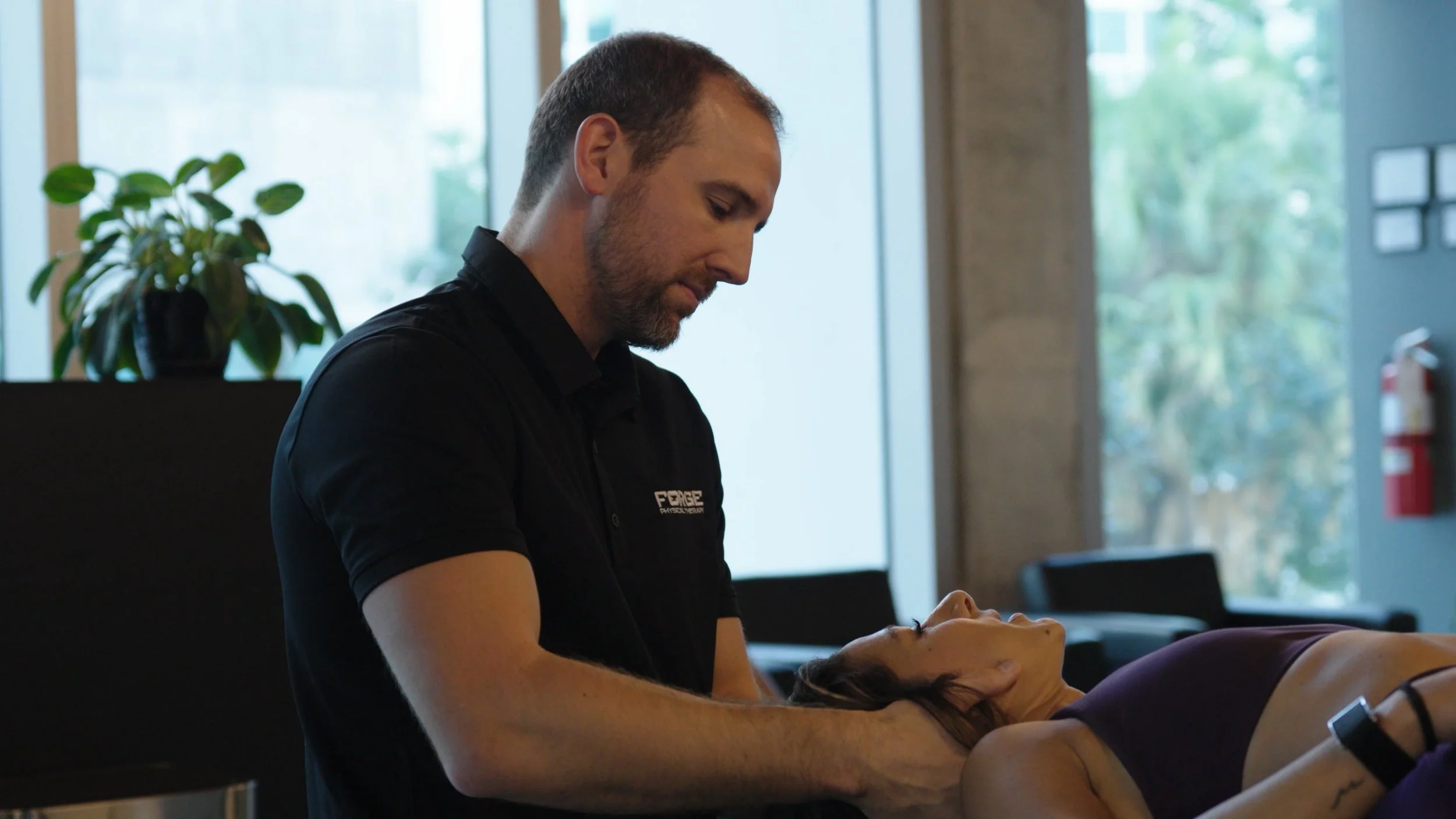
Doctor of Physical Therapy–led care.
Boutique practice, smaller caseloads.
In-network with BCBS, Cigna, Aetna, Medicare, UnitedHealthcare.
Evidence-based, outcomes-focused.
Doctor of Physical Therapy–led care. Boutique practice, smaller caseloads. In-network with BCBS, Cigna, Aetna, Medicare, UnitedHealthcare. Evidence-based, outcomes-focused.
Just out of surgery? Already in protocol? Still researching?
Post-surgical physical therapy is one of the single highest-impact factors in your final outcome — alongside the surgery itself. What happens in the weeks and months after the incision closes determines whether you recover most of your function or all of it.
This page is for you if your surgeon has given you a post-op protocol, you're scheduled for surgery and want to build baseline strength before going in, you're a few weeks or months post-op and have plateaued, or you weren't happy with how the last rehab was going and you want a clinician who will tell you honestly where you are.
- Your surgeon has given you a post-op protocol and you need a PT who will actually read it and follow it.
- You're scheduled for surgery in the coming weeks and want to build baseline strength (pre-hab) before going in.
- You're a few weeks or months post-op, you've done some PT already, and you've plateaued.
- You're a second-opinion seeker — you weren't happy with how the last rehab was going and you want a clinician who will tell you honestly where you are.
How we rehab after surgery
We work from your surgeon's protocol
The protocol is the plan. Every milestone (range of motion, weight-bearing, resistance, return to activity) is set by your surgical team — we progress inside that envelope and communicate directly with the office when we see something worth flagging.
Phased, criteria-based progression
You don't advance because a calendar page turned. You advance when you meet the clinical criteria for the next phase — measured, not guessed. Swelling, range, strength ratios, and movement quality all have to clear before we load more.
The same clinician, every visit
You see Dr. Spencer every visit. Continuity matters in post-op rehab — the clinician who saw you at week two has the context to know what's different at week six. No rotating providers, no catching up from notes, no restarting.
Your post-surgical rehab, phase by phase
Phase 1 — Protect and restore motion
Controlling swelling and pain, restoring the range of motion the protocol allows, and protecting the surgical site. Often starts within days of surgery.
Phase 2 — Rebuild strength
Progressive resistance as the tissue heals and the protocol permits. Symmetry of strength between the surgical and non-surgical side becomes a primary metric.
Phase 3 — Reload function
Stair, step-down, squat, reach, rotate, gait — whatever your life and your sport demand. We load the specific movements you need, not a generic menu.
Phase 4 — Return to activity / return to sport
For athletes and active patients, we don't discharge on "feels okay." We discharge on criteria — strength ratios, hop tests, sport-specific testing where it applies. If you're an athlete, see also our Sports Injury Recovery page.
Surgeries we commonly rehab
Lower body
- ACL reconstruction (patellar tendon, hamstring, quad tendon, allograft)
- Meniscus repair and meniscectomy
- Total knee replacement (TKA)
- Total hip replacement (THA)
- Hip arthroscopy / labral repair
- Achilles repair
- Ankle stabilization (Broström and variants)
- Osteotomies and cartilage procedures
Upper body & spine
- Rotator cuff repair
- Shoulder labrum / SLAP / Bankart
- Total and reverse total shoulder arthroplasty
- Tommy John (UCL) reconstruction
- Elbow, wrist, and hand procedures
- Lumbar and cervical discectomy, laminectomy, and fusion
If your procedure isn't listed, call (214) 774-0600 — we'll tell you honestly if we're the right clinic for your case. For highly specialized procedures (for example, complex hand/wrist), we'll refer you to a certified hand therapist if that's what your recovery needs.
We communicate with your surgeon — not around them
Your surgeon's office is a partner in your recovery, not an obstacle. We send progress notes back to the referring surgeon on a schedule agreed with the office, and we pick up the phone when something unexpected happens — a range-of-motion plateau, unusual swelling, a concern about wound healing. Your surgical team stays informed. That continuity is part of the outcome.
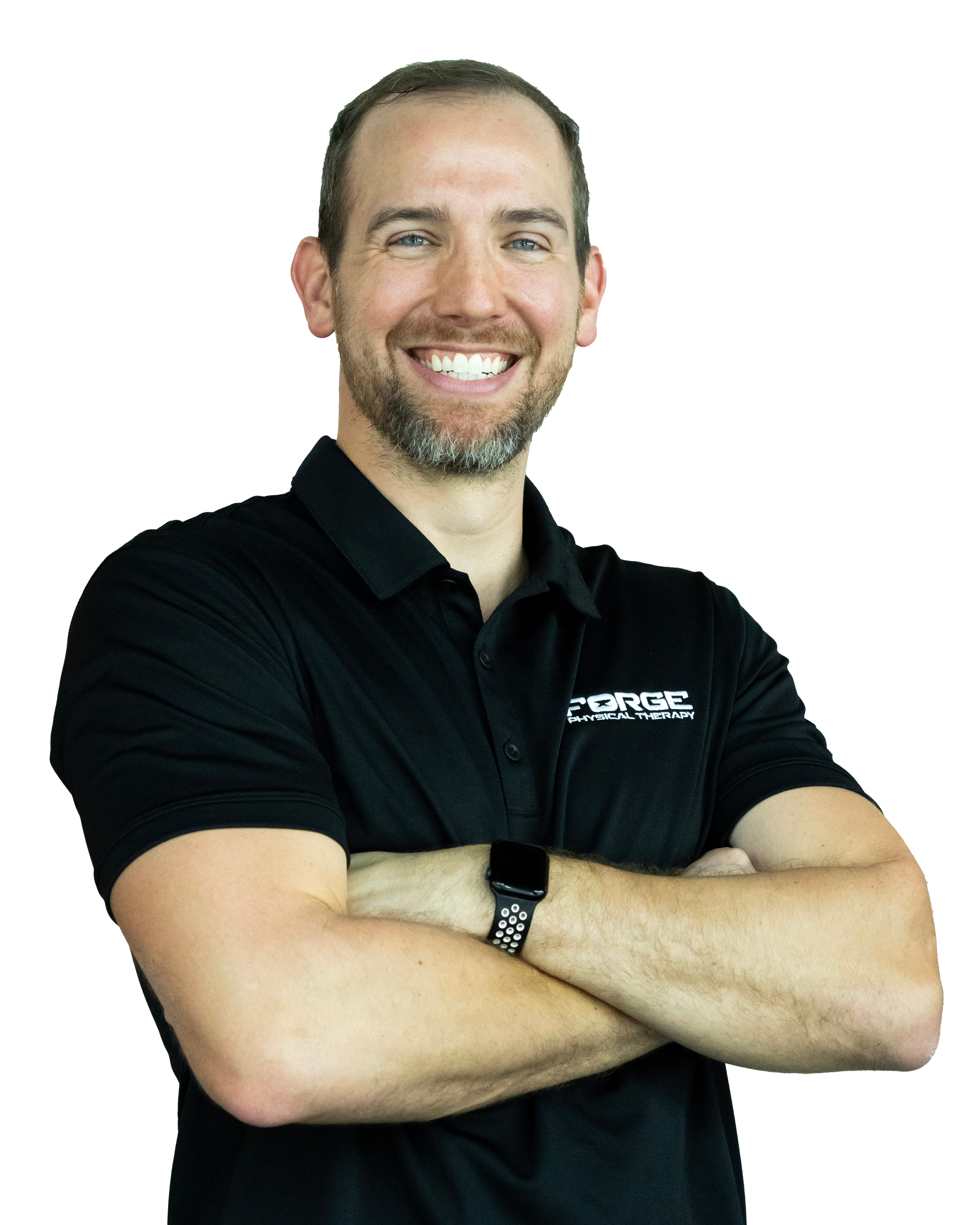
Your clinician
Dr. Eric Spencer, PT, DPT
Dr. Spencer is the founding clinician of Forge Physical Therapy. He holds a Doctor of Physical Therapy and is a Certified Vestibular Specialist through the Institute of Advanced Musculoskeletal Treatments.
His practice is built around a simple idea: a boutique, clinician-led clinic where time, attention, and plan design are calibrated to the patient — so treatment is personal, progressive, and actually moves the needle.
Meet Dr. SpencerFAQ
Frequently asked questions
When should I start physical therapy after surgery?
Timing depends on the procedure and your surgeon's protocol. Some surgeries (for example, rotator cuff and ACL reconstruction) benefit from starting within the first one to two weeks. Others (certain spinal procedures) have a mandatory rest period. The safest answer: get your surgeon's protocol to us as early as possible and we will start at the first appropriate window.
Will you follow my surgeon's protocol?
Yes. Your surgeon's post-operative protocol is the default plan. We progress inside that protocol, not around it. If we see a reason to discuss a modification — either to push safely faster or to slow down because of tissue response — we communicate directly with the surgical team.
Do I need a prescription from my surgeon for post-surgical PT?
For most post-surgical cases in Texas, a physician prescription or referral is the appropriate path because your insurance usually requires it for post-operative coverage and your surgical protocol is the governing document. Bring the prescription and the protocol to your first visit, or have the office fax it to us ahead of time.
How long does post-surgical rehab take?
It varies by procedure. Total knee replacements typically rehab over 10–12 weeks. Rotator cuff repairs often run 4–6 months in phases. ACL reconstructions run 6–9+ months before return to sport. Dr. Spencer will give you a realistic phase-by-phase timeline at your first visit.
What if I haven't had surgery yet?
Pre-surgical (pre-hab) physical therapy improves outcomes for many procedures — especially ACL, knee replacement, and rotator cuff repair. If you know surgery is coming, start now. We will prepare your body and build baseline strength, then transition seamlessly into post-operative care.
Recovery should feel like progress — let's build that plan.
Bring your protocol. Bring your questions. We'll build the rest.
In-network with Blue Cross Blue Shield, Cigna, Aetna, Medicare, and UnitedHealthcare. If you have questions about billing and insurance request a call back.