
Vestibular Therapy in Frisco — Dizziness Isn't Something You Have to Live With
Vertigo, imbalance, BPPV, concussion-related visual symptoms, persistent dizziness — these have specific causes, and most have specific, evidence-based treatments. At Forge, you'll see a clinician who is formally credentialed to diagnose and treat them.
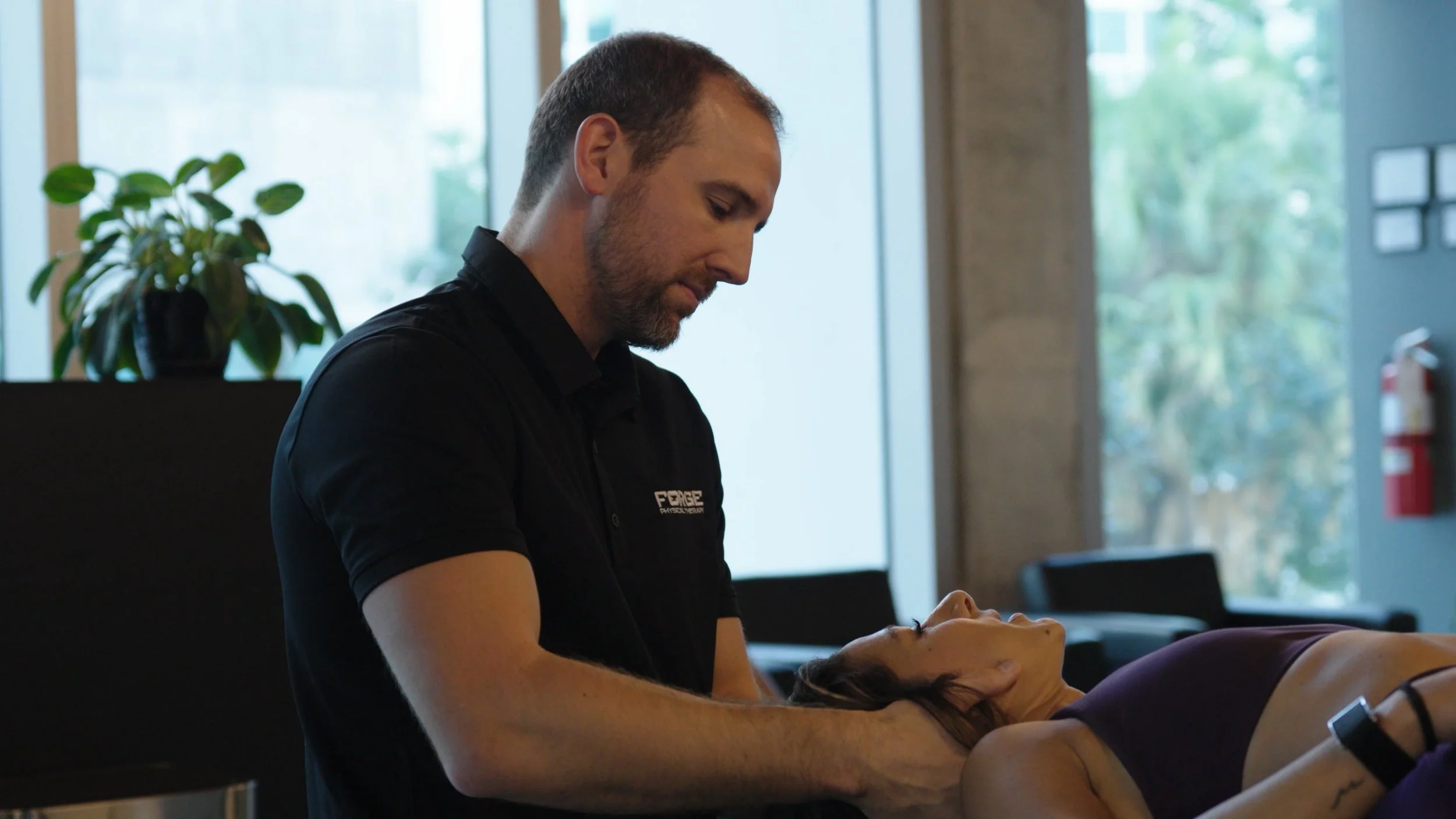
Doctor of Physical Therapy–led care.
Boutique practice, smaller caseloads.
In-network with BCBS, Cigna, Aetna, Medicare, UnitedHealthcare.
Evidence-based, outcomes-focused.
Doctor of Physical Therapy–led care. Boutique practice, smaller caseloads. In-network with BCBS, Cigna, Aetna, Medicare, UnitedHealthcare. Evidence-based, outcomes-focused.
If the room won't stop spinning — or you feel off and no one can tell you why
Vestibular disorders are among the most under-recognized problems in outpatient medicine. Patients are bounced from ER to primary care to ENT to neurology, often with no clear diagnosis and a prescription for anti-nausea medication that doesn't fix the underlying problem.
Most dizziness and balance problems are treatable — but only when the specific cause is identified. Not all dizziness is the same. Vertigo (spinning) is different from disequilibrium (unsteadiness), which is different from lightheadedness (pre-syncope), which is different from visual motion sensitivity. Each points at a different system, and each requires a different intervention.
- You've been told "it's just vertigo" and given medication, but nothing has resolved.
- The ENT cleared you structurally but you still feel off.
- You had a concussion and the dizziness has outlasted every other symptom.
- Rolling over in bed, looking up, or bending over sets off spinning or nausea.
- You're unsteady on your feet, especially in low light, on uneven ground, or in busy visual environments.
- You've been diagnosed with BPPV, vestibular neuritis, vestibular hypofunction, Ménière's, PPPD, or MdDS and need specialized rehab.
How vestibular care works at Forge
Diagnosis before treatment
We don't start exercises until we know what system is involved. Your evaluation includes oculomotor testing, positional testing (including Dix-Hallpike and side-lying variants for BPPV), gaze stabilization assessment, balance testing, and cervical screening. We categorize the problem, then treat it.
Credentialed, specialized care
Dr. Spencer is a Certified Vestibular Specialist through the Institute of Advanced Musculoskeletal Treatments (IAMT). Vestibular rehab is a specialty within physical therapy, and Forge treats it as one — not as a side skill.
Coordinated care with your physician
When vestibular symptoms intersect with neurology, ENT, or primary care, we coordinate directly. If a symptom pattern needs imaging or a medication change, we loop in your referring provider. If you haven't been seen by the right specialist yet, we'll help you get there.
Conditions we commonly treat
Inner ear / peripheral
- Benign Paroxysmal Positional Vertigo (BPPV) — posterior, horizontal, and anterior canal variants
- Vestibular neuritis and labyrinthitis (post-viral vestibular weakness)
- Unilateral and bilateral vestibular hypofunction
- Ménière's disease (management of balance and gait symptoms)
- Post-surgical vestibular cases (acoustic neuroma, labyrinthectomy, stapedectomy)
Central / functional / cervical
- Persistent Postural-Perceptual Dizziness (PPPD, formerly 3PD / chronic subjective dizziness)
- Mal de Débarquement Syndrome (MdDS)
- Cervicogenic dizziness (neck-origin imbalance)
- Post-concussion vestibular and oculomotor symptoms
- Age-related balance decline and fall-risk reduction
- Visual motion sensitivity (grocery-store, driving, screen-related symptoms)
Your first visit
Focused history
We walk through how symptoms started, what triggers them, what relieves them, what medications you've tried, and what prior workups have shown. Patterns in the history narrow the differential dramatically.
Targeted physical exam
Oculomotor exam (smooth pursuit, saccades, vergence, VOR), positional testing (Dix-Hallpike, side-lying roll, head-shake), gaze stabilization testing, balance testing (static and dynamic), and a cervical screen. The exam is the most important tool we have.
Diagnosis and plan
You leave visit one with a working diagnosis — not "you have dizziness," but a specific categorization — and a matching plan. For some conditions (uncomplicated BPPV), treatment begins that visit and may resolve in one to three sessions.
Progressive rehab
For conditions that require adaptation (hypofunction, PPPD, concussion-related), treatment is a progressive program performed in-clinic and at home. We dose it to provoke adaptation, not distress.
Vestibular rehab is a specialty. Be treated like it is.
Generalist PT clinics often advertise "we treat vertigo" but in practice see vestibular patients irregularly, with clinicians trained broadly rather than deeply in vestibular function. The vestibular system is specific, its disorders are specific, and the tests and treatments are specific. Being evaluated by someone who does this often — and has been credentialed in it — changes the accuracy of the diagnosis and the speed of the outcome. That is the entire reason this page exists as its own service.
For physicians, ATCs, and neuropsychologists
If you're a provider referring a patient for vestibular rehab, we'd welcome a direct conversation about the case. Dr. Spencer is reachable at drspencer@forgephysicaltherapy.com for provider-to-provider communication. We send progress notes back on a schedule, and we're happy to accept prescriptions or direct referrals.

Your clinician
Dr. Eric Spencer, PT, DPT
Dr. Spencer is the founding clinician of Forge Physical Therapy. He holds a Doctor of Physical Therapy and is a Certified Vestibular Specialist through the Institute of Advanced Musculoskeletal Treatments.
His practice is built around a simple idea: a boutique, clinician-led clinic where time, attention, and plan design are calibrated to the patient — so treatment is personal, progressive, and actually moves the needle.
Meet Dr. SpencerFAQ
Frequently asked questions
What is vestibular therapy?
Vestibular therapy is a specialized form of physical therapy that treats dizziness, vertigo, imbalance, and related symptoms caused by disorders of the inner ear or the brain's balance-processing system. Treatment uses specific eye, head, body, and positional exercises to retrain how your brain handles balance and orientation.
What is BPPV and can vestibular therapy fix it?
Benign Paroxysmal Positional Vertigo (BPPV) is the most common cause of vertigo — it is caused by displaced calcium crystals in the inner ear. BPPV is often resolved in one to three visits using positioning maneuvers such as the Epley or Semont. A proper diagnosis (typically via Dix-Hallpike or side-lying tests) determines which maneuver applies.
Do I need a referral for vestibular therapy in Texas?
No. Texas direct-access laws allow a physical therapist to evaluate and begin treatment for dizziness and vestibular symptoms without a physician referral. Your insurance may require a referral for reimbursement; we will verify that before your first visit.
How long does vestibular therapy take to work?
It depends on the diagnosis. BPPV often resolves in one to three visits. Vestibular hypofunction (inner-ear weakness after a viral event or injury) typically takes 6–10 weeks of progressive exercise. Persistent postural-perceptual dizziness (PPPD) and chronic cases can take longer. Dr. Spencer will set a realistic timeline at your evaluation.
Will vestibular therapy make me feel worse before it makes me feel better?
Temporary, mild symptom provocation during and immediately after exercises is expected — it is part of how the brain adapts. The goal is controlled exposure that your system can learn from, not distress. We calibrate dose specifically to keep you in the productive range.
Dizziness has a cause. Let's find it.
Book an evaluation with a Certified Vestibular Specialist — or call us and we'll talk through your symptoms first.
In-network with Blue Cross Blue Shield, Cigna, Aetna, Medicare, and UnitedHealthcare. If you have questions about billing and insurance request a call back.