
Manual Therapy in Frisco — Because Hands-On Care Still Matters
Joint mobilization, soft-tissue work, IASTM, and targeted manual techniques — delivered by a Doctor of Physical Therapy and paired with the exercise that makes the change stick.
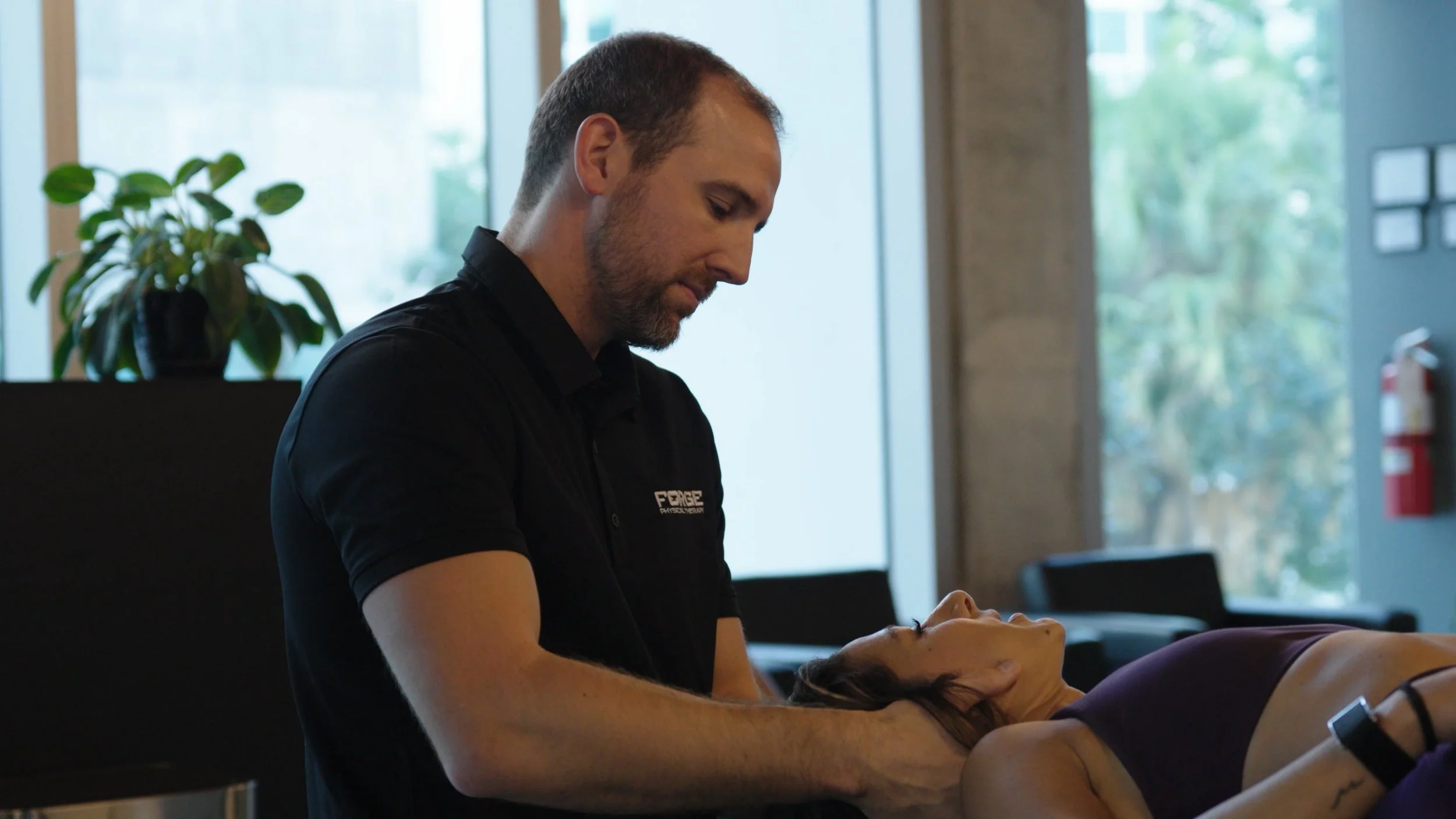
Doctor of Physical Therapy–led care.
Boutique practice, smaller caseloads.
In-network with BCBS, Cigna, Aetna, Medicare, UnitedHealthcare.
Evidence-based, outcomes-focused.
Doctor of Physical Therapy–led care. Boutique practice, smaller caseloads. In-network with BCBS, Cigna, Aetna, Medicare, UnitedHealthcare. Evidence-based, outcomes-focused.
What manual therapy is — and what it's for
Manual therapy is a category of hands-on techniques used by a physical therapist to improve joint motion, release soft-tissue tension, and reduce pain — so you can move more freely and load the tissue the way it needs to be loaded to actually heal.
The point of manual therapy is not the technique itself — it's what you can do once the technique has been applied. Every hands-on intervention we use is chosen to open a movement, reduce a guarding pattern, or unlock capacity that the active portion of the visit then builds on.
- Joint mobilization. Graded, controlled movement applied to a joint to restore normal motion. Most of what we do is lower-grade, oscillatory mobilization — not high-velocity thrust.
- Soft-tissue mobilization. Skilled hands-on work to tissue (muscle, fascia, tendon) to reduce tone, break up restrictions, and improve glide.
- Instrument-Assisted Soft-Tissue Mobilization (IASTM). Blunt instruments used to address specific soft-tissue restrictions.
- Muscle energy techniques. Patient-generated muscle contractions used to reposition a joint or lengthen a muscle.
- Mobilization with movement (MWM). Active movement performed while the clinician applies a sustained glide to a joint — often produces immediate range-of-motion changes.
Our approach to hands-on care
Paired with active exercise, always
Passive-only care has its place — usually small, usually early, usually transient. Forge uses manual therapy in the same session as targeted exercise: hands-on to open the door, movement to walk through it. That pairing is what separates a clinical change you can feel today from one that's still there next week.
Graded to the case
Not every patient needs a high-grade mobilization, and not every mobilization needs to be aggressive to be effective. We pick the grade, technique, and region that fit your exam findings — and we explain why before we do it.
Skilled, not routine
Manual therapy isn't a line item we check off every visit. We use it when it will move your plan forward, and we skip it when it wouldn't. You're not paying for fifteen minutes of hands-on time because the treatment sheet said so.
Where manual therapy earns its place
Mobility & motion
- Frozen shoulder and post-immobilization stiffness
- Post-surgical range-of-motion restrictions
- Cervical and thoracic spine restrictions
- Hip and ankle mobility limits affecting squatting, running, or walking
Pain & guarding
- Headaches with cervical and upper-thoracic drivers
- Acute neck and back pain with guarding
- Tendinopathies (as an adjunct to loading)
- TMJ and jaw dysfunction
- Post-concussion cervical pain
What a manual therapy session looks like
Assessment first
We reassess your movement at the start of the visit — what's restricted, what's guarded, what changed since last time. The assessment determines whether manual therapy is the right tool today.
Technique selection and consent
If hands-on work is indicated, we tell you what we're doing, why, and what it will feel like before we start. Any higher-grade technique — especially high-velocity thoracic or cervical techniques — is walked through and consented to separately.
Hands-on, then active
The technique itself is usually brief — a few minutes per region. Immediately after, we retest the movement and pair it with active work: a mobility drill, a motor-control cue, a strengthening pattern. The active piece is where change consolidates.
Home follow-through
You leave with one or two things to do on your own between visits — not a generic exercise handout, but the specific work that extends what we did in session.
Manual therapy vs. massage — not the same thing
Both are legitimate, both have their place, and they are not interchangeable. Massage — performed by a licensed massage therapist — is generally oriented around whole-body relaxation and broad soft-tissue work. Manual therapy, performed by a physical therapist, is targeted to a specific joint or tissue based on an orthopedic/movement diagnosis and integrated with exercise in the same session.
If your goals are general relaxation and stress relief, a massage therapist is the right provider. If your goal is to resolve pain, restore motion, and move better — that's where manual therapy fits.

Your clinician
Dr. Eric Spencer, PT, DPT
Dr. Spencer is the founding clinician of Forge Physical Therapy. He holds a Doctor of Physical Therapy and is a Certified Vestibular Specialist through the Institute of Advanced Musculoskeletal Treatments.
His practice is built around a simple idea: a boutique, clinician-led clinic where time, attention, and plan design are calibrated to the patient — so treatment is personal, progressive, and actually moves the needle.
Meet Dr. SpencerFAQ
Frequently asked questions
What is manual therapy?
Manual therapy is a set of skilled hands-on techniques used by a physical therapist to improve joint motion, reduce soft-tissue tension, and decrease pain. Techniques include joint mobilization, soft-tissue mobilization, instrument-assisted soft-tissue mobilization (IASTM), muscle energy techniques, and mobilization with movement.
What's the difference between manual therapy and massage?
Massage is typically focused on whole-body relaxation and general soft-tissue work. Manual therapy by a physical therapist is targeted to specific joints and tissues based on a movement diagnosis, and is integrated with exercise to produce changes that persist. Both have their place; they are not the same service.
Does manual therapy "crack" your joints?
High-velocity thrust techniques (which sometimes produce an audible pop) are one tool among many. Most manual therapy is graded, controlled mobilization — not manipulation. We use the technique that fits the case, and we explain and consent to anything higher-grade before performing it.
Why do you pair manual therapy with exercise?
Manual therapy alone produces temporary changes in pain, range of motion, and muscle tone. Pairing it with active exercise in the same session and at home is what allows the nervous system and tissue to consolidate the change. Hands-on work opens a window; exercise locks it in.
Is manual therapy safe?
Manual therapy by a trained physical therapist is well-established and broadly safe. Like any intervention, it has situations in which specific techniques are avoided or modified (for example, certain cervical high-velocity techniques in patients with vascular risk factors). We screen for these at evaluation and adjust the plan accordingly.
Hands-on care that actually moves your plan forward.
Book an evaluation — we'll tell you honestly whether manual therapy belongs in your care, and what else belongs with it.
In-network with Blue Cross Blue Shield, Cigna, Aetna, Medicare, and UnitedHealthcare. If you have questions about billing and insurance request a call back.