
A physical therapy practice, built the way it should have been in the first place.
Forge exists because too many patients are processed through physical therapy instead of treated. We built a boutique, doctor-led practice in Frisco to do it differently — one patient at a time, under one clinician's care, from evaluation through discharge.
Clinician-owned.
Doctor of Physical Therapy.
Boutique by design.
In-network with BCBS · Cigna · Aetna · Medicare · UHC.
Clinician-owned. Doctor of Physical Therapy. Boutique by design. In-network with BCBS · Cigna · Aetna · Medicare · UHC.
Physical therapy deserves a better version of itself
The modern insurance-driven PT clinic is engineered for throughput. Three, four, five patients are scheduled at the same time. A technician or aide runs them through exercises. The physical therapist — the clinician with the doctorate — spends ten minutes with each person, then moves to the next room.
That model works for the billing department. It doesn't work for patients. Evaluations are rushed. Treatment plans are templated. Progression is delayed because the clinician isn't watching closely enough to know when to advance. And the patient — the person with pain or a problem that needs solving — gets processed instead of treated.
Forge is built the other way. A Doctor of Physical Therapy runs your care from the first visit to the last. The schedule is deliberately limited so that evaluation, treatment, and progression all happen under the same clinician's attention. No hand-offs. No revolving door. No trading outcomes for volume.
- A Doctor of Physical Therapy — not a tech — runs every session.
- Staggered scheduling: never more than two patients being actively worked with at the same time.
- Evaluation, treatment, and progression decisions all made by the same clinician.
- In-network with BCBS, Cigna, Aetna, Medicare, and UHC — insurance coverage without the mill model.
- Evidence-based protocols, not templated exercise sheets.
- Discharge on criteria, not on visit cap.
Three principles drive every clinical decision
One clinician, one plan
Continuity of care is the single most undervalued variable in rehab outcomes. The same Doctor of Physical Therapy evaluates you, treats you, progresses you, and discharges you. You don't get a template passed between hands — you get a plan that evolves with one mind behind it.
Diagnosis before exercise
We don't prescribe a program until we understand what's actually going on. Every evaluation starts with a focused history and a real physical exam — orthopedic, neurologic, vestibular, or sport-specific as the case requires — and the working diagnosis drives the treatment plan. Not the other way around.
Evidence-driven
Manual therapy, dry needling, vestibular rehab, progressive loading — we use what the evidence supports for your specific case, and we adjust when the evidence moves. We don't build our care model around any one technique because no single technique treats every case.
What a visit with Forge actually looks like
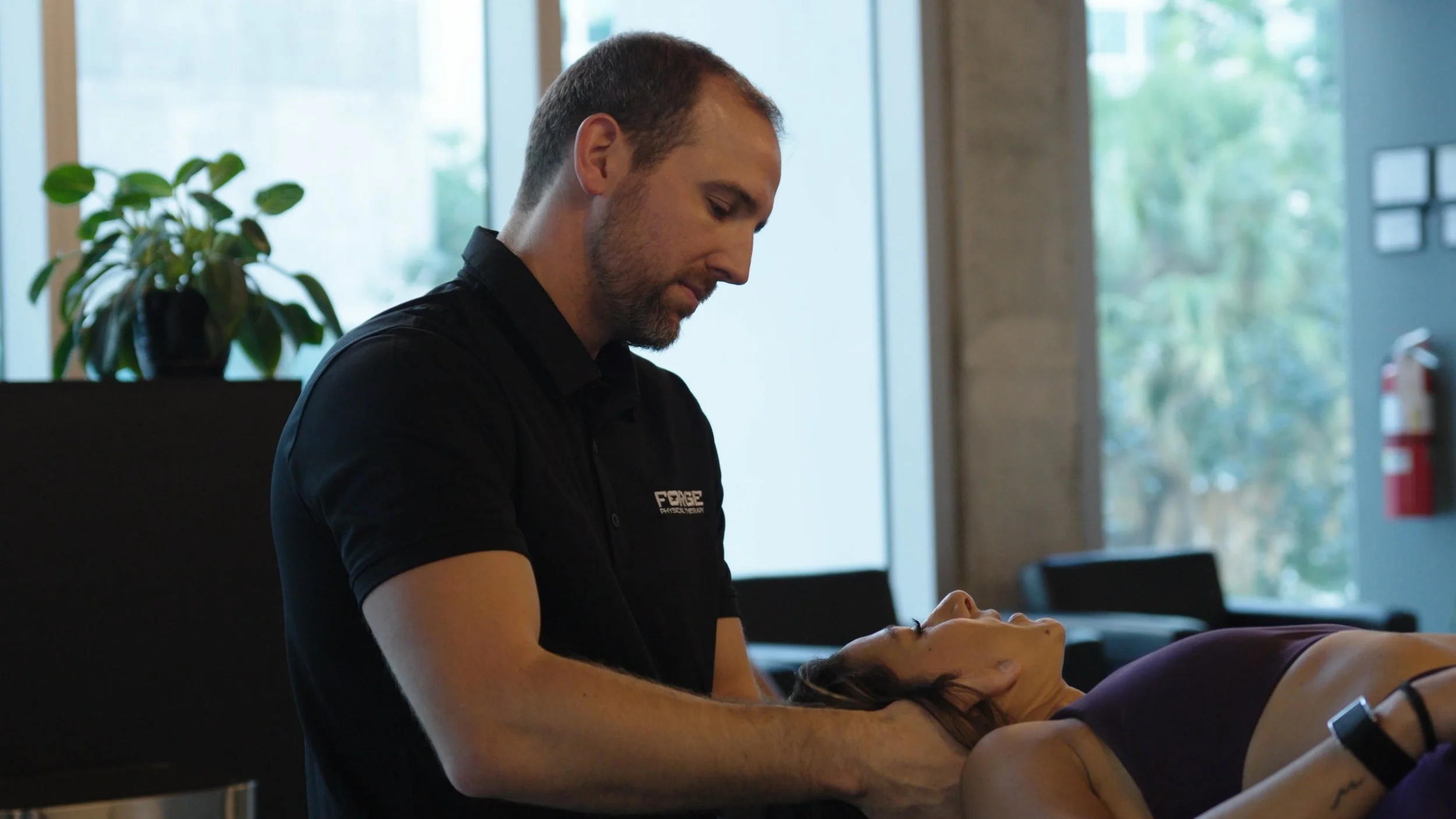
Evaluation (visit 1). 60 minutes with Dr. Spencer. Focused history of what's going on, what triggers it, what you've already tried. A physical exam calibrated to the problem — orthopedic tests for a shoulder, Dix-Hallpike for dizziness, Buffalo treadmill for a concussion, return-to-sport criteria for an athlete. You leave with a working diagnosis and a plan you actually understand.
Treatment (visits 2–N). Each session combines hands-on work (manual therapy, mobilization, dry needling when appropriate), progressive loading or neuromotor retraining, and in-session reassessment. We don't do cookie-cutter exercise sheets. What you do at home is specific, brief, and calibrated to what happened at clinic.
Progression. Dr. Spencer is watching every session — because he's the one running every session. That means your program advances when you're ready, stays where it is when you're not, and gets harder or more nuanced based on real-time observation, not a six-week template.
Discharge. You're discharged when you've hit defined, objective criteria for your condition — range of motion, strength, balance, sport-specific test thresholds — not when your insurance visit cap runs out and not when some generic "eight weeks" clock expires.
Physical therapy works when the physical therapist is watching. We built this clinic around that simple fact.
Every structural decision — schedule density, room count, care model, staffing — flows from one belief: the clinician's attention is the active ingredient in rehab outcomes. Everything else is supporting infrastructure.
Meet Dr. Eric Spencer, DPT
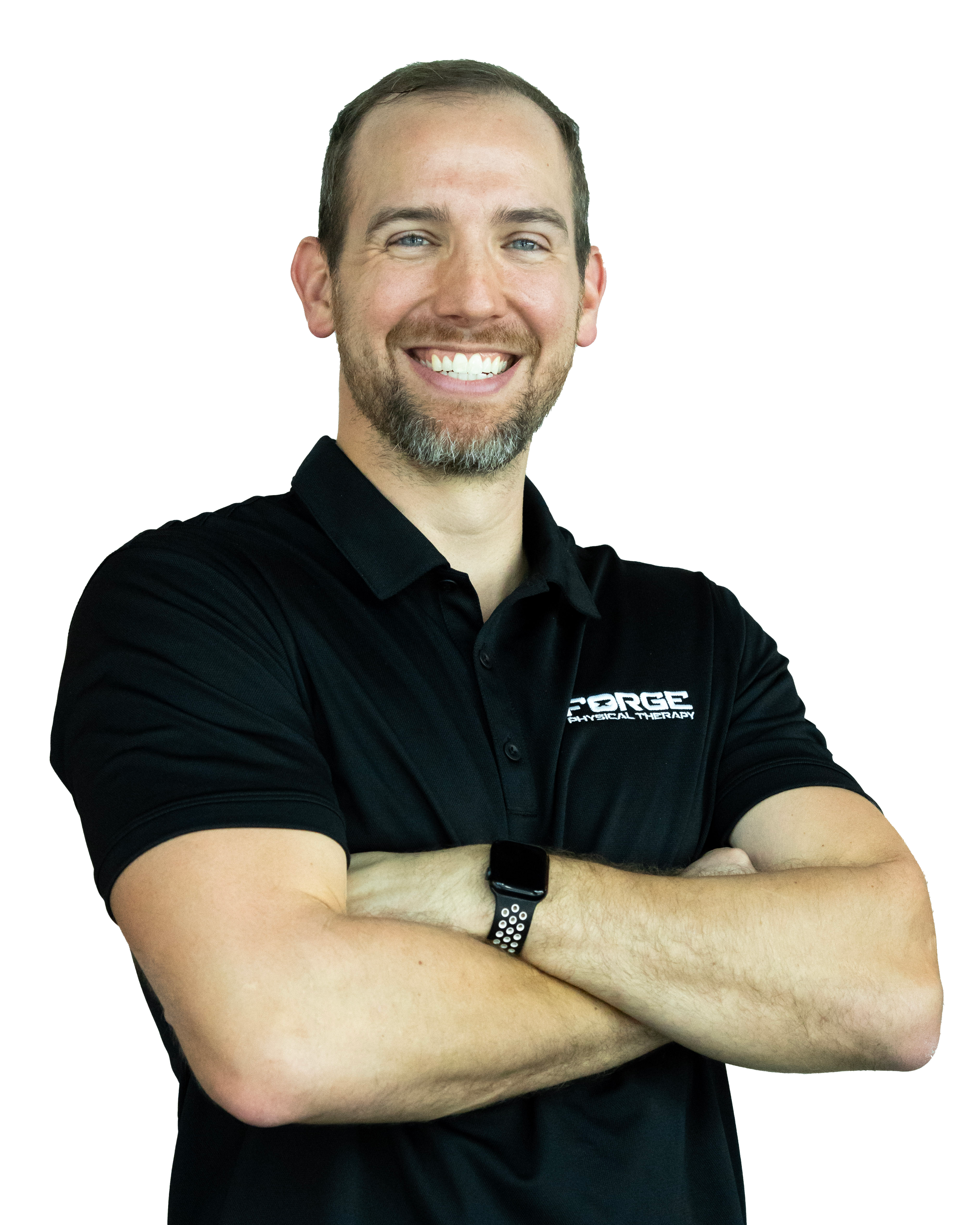
Founder · Doctor of Physical Therapy
Dr. Eric Spencer, DPT
Dr. Spencer is a Doctor of Physical Therapy, Residency-trained Orthopedic Clinical Specialist, and a Certified Vestibular Specialist through the Institute of Advanced Musculoskeletal Treatments (IAMT). His clinical focus is orthopedic physical therapy, post-surgical rehab, vestibular therapy, concussion recovery, and return-to-sport care for active patients and athletes.
Before founding Forge, Dr. Spencer trained and practiced across multi-site sports medicine and orthopedic environments — and watched first-hand what the insurance-mill model does to outcomes. Forge is his corrective: a deliberately small, deliberately high-touch, deliberately doctor-led clinic built to practice physical therapy the way it was meant to be practiced.
He lives in the North DFW area and treats patients from Frisco, Little Elm, Prosper, The Colony, and across the north-DFW corridor.
Read Dr. Spencer's full bioBuilt for how we practice
Forge is located in Frisco at 2650 King Road, Suite 500, in the 75036 corridor that straddles Frisco and Little Elm. The space was designed to support the care model: treatment rooms sized for one-on-clinician work, open floor space for gait, balance, and return-to-sport testing, and equipment chosen for versatility over volume.
We intentionally don't look like a chain-clinic rehab gym, because we don't practice like one. No walls of CPM machines. No row of stationary bikes with patients on timers. Just the equipment and the space needed to evaluate carefully, treat precisely, and progress with intent.
Practical details.
- Free parking at the door — no garage, no paid meters.
- Ground-floor access; step-free entry.
- In-network with BCBS, Cigna, Aetna, Medicare, and United Healthcare.
- Serving Frisco, Little Elm, Prosper, The Colony, and surrounding DFW communities.
- Direct-access: no physician referral required under Texas law for most conditions.
If this is how you want to be treated, let's talk.
Book an evaluation with Dr. Spencer — or call us first if you have questions about your condition, your coverage, or whether Forge is the right fit.